Sermon: Turn, Then, and Live
Preached September 27, 2020 at Highlands United Presbyterian Church
Scripture: Ezekiel 18:1-4, 25-32; Philippians 2:1-13
In Ancient Israel, there was a priest named Ezekiel. He was a bit of a stunt prophet, once lying bound and naked to make a point. But one could forgive his penchant for grand gestures given the tragedy of his days: the conquering and destruction of Jerusalem by the Babylonian Empire and the exportation of the Israelites to exile in Babylon. Ezekiel went with them, comforting them, guiding them, and challenging them.
In one of our unread lectionary readings for today, from Ezekiel chapter 18, Ezekiel calls out the sins of their past, insisting they are not doomed by their parent’s sins. He speaks of three generations, which the scholar Walter Brueggemann identifies as three kings: Josiah the Good King, Jehoiaikim the bad king, and Jehoiachin the third and current king in exile. The message seems to be – the verdict is out. And this passage seems to imply: the people will decide whether to follow the sins of the past, of the evil leader who oppresses the poor and needy and commits adultery, or choose righteousness. Ezekiel closes in simple yet dramatic fashion, telling the people: Turn, then, and live.
—
Reading our politics onto Biblical events and theology is a precarious endeavor. Who is the good king? Who is the bad? Who is the Republican, who is the Democrat? And where do the Libertarians and Democratic Socialists and politically homeless fall?
Presbyterian Pastors, among others, understandably treat politics with caution and care. One way is by saying things like “we can agree to disagree” or “we are proud to be politically diverse. We are a Purple church.”
I have a different message today, because I think there is something crucial and deciding missing in these conversations in predominantly white churches. And that’s what we are. We are not purple, we’re not blue or red. We tend to be one color, in terms of race – and that is white. That is not diversity, and it tends not to be a whole lot of political difference either. The story we tell about the deep divide between white Republicans and white Democrats is a convenient one, which leads us to efforts to “have the same mind” or “just get along”, when our Black friends, our Hispanic and Arab friends, our friends of many races and ethnicities cry out from within and outside our churches, from people of every religion and none, for us to examine this thing and this power called “Whiteness”.
This is our history of the Presbyterian Church, along with others like the Episcopalians and Southern Baptists. There are of course historically black churches in our denominations, like Woodlawn Presbyterian across the river, and a number of Korean churches as well. But the historical power has been with the white churches.
And our white church history that we share with other denominations has many sins of racism we need to confess which have given birth to our present fractured political moment in America. To be blunt, getting white people to “agree to disagree” about politics will not get us to the confession and repentance that we need. Ezekiel cries out to us too: Turn, then, and live.
—
This is a hard word, confronting the legacy of white supremacy in the Church. So I want to turn first to a word of encouragement found in our reading from Philippians. This is, in my view, one of the most beautiful passages in all of scripture. Listen to all the words sprinkled through this passage: encouragement, consolation, love, sharing, compassion, sympathy, joy, accord. Be of one mind, Paul tells the Philippian Church. Be of Christ’s mind, he says.
It reminds me of my favorite Psalms as well, Psalm 133, which I sang as a song with a church in Guatemala: How very good and pleasant it is when kindred live together in unity!
Christian unity is a favorite topic of preachers. On campus at UNF, we will see Christian ministries seeking to come together for events in the name of Christianity unity. You see this in citywide efforts too. Every knee bow, every tongue confess that Jesus is Lord.
Now, this beautiful word, though, it has a catch. Paul is not calling for unity for the sake of unity. He is not talking about uniformity in culture either.
He is talking about unity in Christ. And he makes very clear who this Christ: humble, compassionate, with no conceit or selfish ambition. Loving others, looking to their interest. Not a leader who holds on to power for dear life.
That is the mind of Christ and Paul insists, “Let that same mind be in you.”
So while this is a call to Christian unity in one sense, it is also a call to Christian disunity – to be disunified from that which is contrary to Christ’s mind. In our history and in our present. We cannot be united with a false Christ.
I hope two things will guide us as we continue: that we, especially White Christians, with the humility of Christ will listen and learn about the sins of our church and political history and face them in this moment too. And I hope that we will not seek a false peace called Christian unity that ignores how our “whiteness” has been used as a weapon of complacency or outright violence against people of color.
—-
Before continuing, we should talk about word “race”, we are talking about a fairly recent human construct. In other words, race is a made up idea. At some point in our life we begin to realize, those of us who are white, actually have a lot of different skin tones, some closer to white, others peach or tan. People who are Black have different shades of brown skin, and there are lots of people who don’t fit neatly in either category. So obviously these ideas about race are made up, they are not biological.
The word race comes from the Spanish word Raza, which referred to the caste or quality of authentic horses, and came to be used in the Americas for the new people encountered. Eventually it became used to justify enslavement of African peoples and our subsequent white authored America systems of lynching and Jim Crow segregation.
And this construct was justified by Christian churches. I am reminded of when the priest Ezekiel is rough with his audience. He asks, do you think the Lord is unfair? Is it not your ways that are unfair?
Christians were the elected officials and church leaders throughout the South and the Conferderacy who propped up these racist systems and justified them with scripture. Among we Southern Presbyterians, Thornwell is a well known name – though not for the fact that he used scripture and theology to justify slavery. The Southern churches like the Southern Baptists and Methodists and Presbyterians broke off from their northern counterparts to support slavery. That being said, white people in the North and other expanding regions of the United States had their forms of white supremacy too. Of course, none of this had anything to do with the humble and compassionate Christ.
Few white people stood up to these systems, though it’s clear that people always knew these things were wrong.
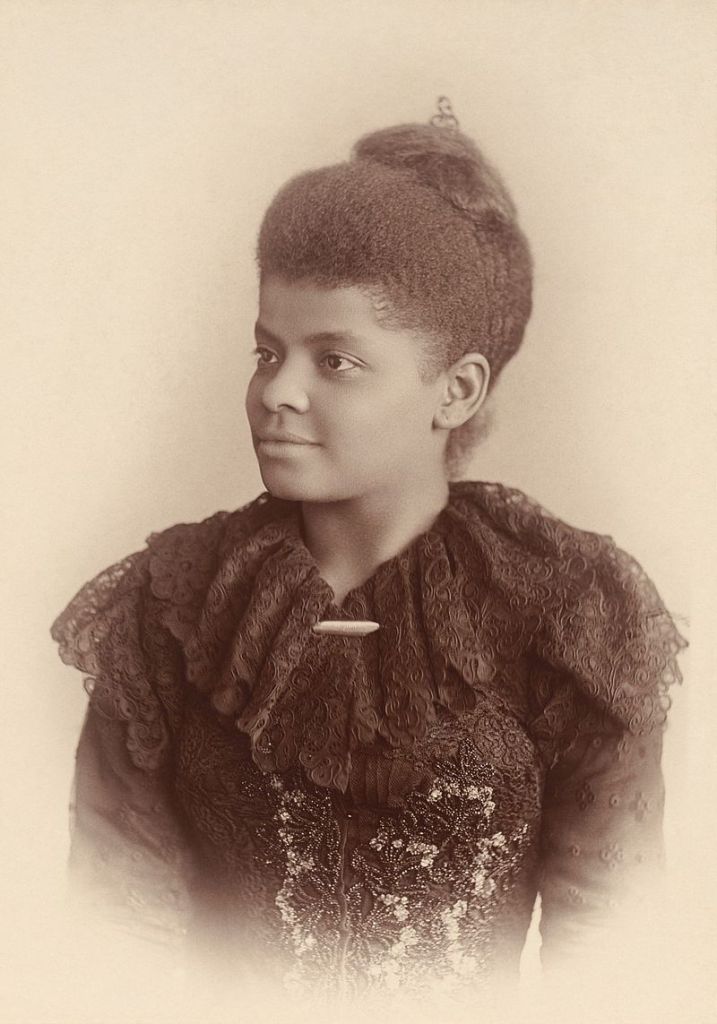
Ida B. Wells, a black woman, was a famed warrior against lynching that I wish I had learned more about earlier in life. She was born during the era of slavery and grew up to be a world changing journalist. She brought light to what others would not speak. She spoke about the horror of lynching, saying, “American Christianity heard of this awful affair and read of its details and neither press nor pulpit gave the matter more than a passing commen.” Even one of my heroes of faith, progressive Baptist preacher Harry Emerson Fosdick apparently made little or no mention of lynching.
Last week, I saw news of the death of Reverend Robert Graetz. He was among the only white pastors in Mongomery who supported the bus boycott organized by Martin Luther King Jr. in 1955. In retribution, the Ku Klux Klan, which identified as Christian, firebombed his house 3 times. His family survived. This was unfortunately not the case for many black families and their children.
I watched a movie last week called A Hidden Life. It is adapted from the true story of an Austrian man, Franz, who in the 1930s refused to serve in the Nazi military. Eventually he died for his conviction. He stood alone, with practically only his wife standing with him. He is a devout Christian man who becomes disillusioned to see the brutality and violence of the regime. And he finds that the church will not stand with him. He finds a painter in his church who laments his own complicity. He says: “Christ’s life is a demand. I paint their comfortable Christ with a halo. How can I paint what I have not lived?” And he says, “Some day I’ll paint a true Christ.”
And this is what Franz does. Like Christ, he looks to the interest of others, and gives his life for what is right. The movie title refers to his hidden life, his small act of righteousness, which he was told would have no effect. But his example lives. May we too paint a true Christ.
—
The priest Ezekiel seems to have great hope for the people too. He says, gets yourselves a new heart and a new spirit. I think what this means for predominantly white churches is that we need to learn from our history and let it inform our politics, and learn from our neighbors who are Black, Native American, Hispanic, Korean, Japanese Americans, and many others about their historical and present experience.
This will bring hard and uncomfortable truths to light. We will need to confess our sins, past and present. Our politics of whiteness, enshrined in places of power, in the presidency, and in nearly every political party, will have to be challenged. A church unified with the humble Christ will have to say no to white supremacy.
I am convinced that the problem of politics in predominantly white churches like ours is not primarily a problem of civility and so will not be solved by civil discourses and sermons about “loving disagreement”. Our problem is whiteness and it will be solved by confession and repentance.
Our past is settled. But our future is not cast. Racism is in our past but we can turn, then, and live. We can choose to paint a true Christ.
 Matt Hartley